Happy Ethiopian New year (2005)
Ethiopian Social Assistance Committee (ESAC)
In celebration of Ethiopian New Year, ESAC brings the first Cultural Exchange Family Day for adopted Ethiopian children and their families.
New York, New York –
ETHIOPIAN SOCIAL ASSISTANCE COMMITTEE hosts a family day for those adoptive families who would like to learn more and about Ethiopian history and culture. ESAC will hold an event on Sunday, October 28, 2012, at 310 E. 42nd Street in New York City.
ESAC provides a bridge for adoptive families to connect with Ethiopian community. Its goal is to make an impact in the local Ethiopian community and make a real difference in the lives of children and their families. ESAC gives Amharic classes in the New York area for all interested individuals, from adopted Ethiopian children to their parents, to researchers and students. All who are interested in learning Ethiopian language and history are welcome.
This interest is increasing and we are asking that you join us to share in the celebration of Ethiopian New Year. ESAC works to create awareness and to help families to connect with Ethiopian roots.
“Let me say ‘culture is a bridge towards understanding’. Knowing each other provides us with greater opportunities for peace. Not only that, we all have a place in this world,” said Zewditu Fesseha, the Founder of ESAC. “We are seeing citizens of the diaspora and Americans using the power of their voice to shed light on their own and each other’s well-being. This family and cultural exchange day will bring us together.”
ESAC will present Ethiopian music, food,dress and history.
Make donations here
Ethiopian Social Assistance Committee here (hereinafter ESAC) is organized under the non-profit public benefit corporation law for welfare and educational purposes. The community in need of social assistance and other concerns, the ESAC is formed as a non-profit organization. Our mission is to (in the next 5 years) bring rights to domestic workers in the Middle East. Within that goal, the source of the problem to solve is to plan to educate the youth to better understand this circumstance. Please help us and donate to eradicate inhumane conditions of women.
Click below to make donations:

Resolution in Support of Foreign Domestic Workers in the Middle East
WHEREAS, it is known large number of Ethiopian women travel to the Middle East to work as domestic workers, and often most of them are abused, denied their salaries, held in captivity, raped, and tortured by their employers; and,
WHEREAS, it is also known that majority of the governments in the Middle East exclude foreign domestic workers from legal employment protection; and,
WHEREAS, the United Nations Commission on Human Rights and the International Labor Organization have to put more pressure on the Middle Eastern governments; and,
WHEREAS, the abuse of domestic workers is a human rights issue, which needs an in-depth understanding and a strategic solution within and beyond the Ethiopian community; and,
THEREFORE, BE IT RESOLVED, the Ethiopian Social Assistance Committee has inaugurated its first public meeting on March 03, 2012, to create an advocacy task force to lobby governments and responsible parties on the plight of foreign domestic workers, particularly Ethiopian women, in the Middle East.
BE IT FURTHER RESOLVED, the Ethiopian Social Assistance Committee calls on the governments of the Middle Eastern countries where the abuses occur, the Ethiopian government and governments of others countries that send domestic workers to the Middle East, the United Nations Commission on Human Rights, and the International Labor Organization to find practical and sustainable solutions to ensure that the human as well as civil rights of domestic workers are fully protected.
BE IT FURTHER RESOLVED, the Ethiopian Social Assistance Committee expresses its interest in collaborating with governmental and civil organizations that are already advocating for foreign domestic workers and are actively involved in alleviating the problem.
BE IT FINALLY RESOLVED, the Ethiopian Social Assistance Committee believes that women’s basic human and civil rights must be ensured, and reaches out to all concerned individuals to join the movement in raising awareness for the foreign domestic workers and in demanding that the abuse they face must be abolished.
For Immediate Release
Ethiopian Social Assistance Committee (ESAC)
First event held in celebration of Women’s History Month, advocating and creating awareness about the abuse of Ethiopian women in the Middle East
New York, NY (March 22, 2012) — The Ethiopian Social Assistance Committee held its first event on March 3rd, 2012, celebrating the Women’s History month by advocating for domestic workers in the Middle East.
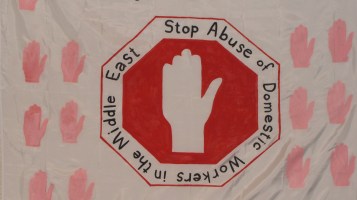
The event featured a panel discussion that brought together activists from different walks of life, including Ammiebelle Omoshalewa, a life member of the NAACP and the National Council of Negro Women, Ms. Ghennet Girma, Director of International Ethiopian Women Organization, and Ms. Tsehai Wodajo, Director of Real (Resources for Enrichment of African Lives) of Minnesota. The chairperson and founder of ESAC, Ms. Zewditu Fesseha and the moderator, Tigist Selam, led the discussion highlighting the urgency of the issue with continued abuse of Ethiopian domestic workers in the Middle East.

The panelists presented various discussion points from economical and political issues, which they explained are driving the women to seek employment in these countries. They also discussed the lack of legal and cultural framework in the Middle East countries, leading employers to freely abuse the domestic workers. Ms. Omoshalew related the ongoing abuse to the days of civil rights movement in the United States, and charged the audience to fight on. Ms. Ghennet emphasized on solving the problem from its root in Ethiopia, while addressing the brutal treatment of domestic workers. In conclusion, Ms. Zewditu Fesseha emphaised that the challenge is very high but everyone could do it! She also suggested that everyone work together in order to achieve the goal. Ms. Zewditu Fesseha also asked that people use their professionally, technically, financial, to help the organization in everyway. She says, “Enough talking, action is needed!”
The audience on its part condemned the abuse of domestic workers, and discussed possible solutions to address the problem. Some of the points addressed include, the women living in New York City that have escaped the brutal experience in the Middle East and are seeking help, the political challenge in addressing the migration of domestic workers both in Ethiopian and host countries, and the lack of legal basis to fight for the right of domestic workers in the host countries. The audience was divided among the five borough of NYC, and during a working dinner, took on the challenge of exploring the abuse of domestic workers in five different states in the Middle East, including Saudi Arabia, Lebanon, United Arab Emirates, Bahrain, and Kuwait.

The Ethiopian Social Assistance Committee is a non-profit organization. It is organized under the Nonprofit Public Benefit Corporation law for welfare and educational purposes. The Ethiopian Social Assistance Committee vision is to support the youth and women’s rights, health, education and culture.

Press Release
Ethiopian Social Assistance Committee (ESAC)
In celebration of Women’s History Month, Uses Advocacy to Create Awareness on Ethiopian Women in the Middle East
New York, New York (January 29, 2012) – ETHIOPIAN SOCIAL ASSISTANCE COMMITTEE will host its first Women’s History Month event on March 3, 2012. As you may or may not know, Ethiopian women in the Middle East have been abused or killed for years. This travesty is still prevalent and we are asking that you join us and our panel of experts to work towards eliminating this issue by advocating, creating awareness and justice for the victims and or their families. On March 3, 2012 this inaugural event will take place at 828 2nd Avenue in New York City.
“As the need for support continues to grow, this month we honor all Women by giving back and making an impact on our local and international communities,” said Zewditu Fesseha, the Founder of ESAC. This month, throughout the year, we are seeing citizens of the Diaspora and Americans using the power of their voice to shed light on their own and each other’s well-being and making a real difference in the lives of women around the world.
In keeping with the theme for Women’s History Month 2012, “Women’s Education – Women’s Empowerment” ESAC plans to host the start of a conversation which aims to mark the importance equal rights and knowledge of the human condition. We can transform as well as abolish these brutal practices. The panel of speakers, as well as the host will share their personal associations to the movement, ideas for resolutions, and more.
The Ethiopian Social Assistance Committee is a non-profit organization. It is organized under the Nonprofit Public Benefit Corporation law for welfare and educational purposes. The Ethiopian Social Assistance Committee vision is to support women’s rights, health, education and culture. In order to improve their awareness on the issues mentioned, ESAC provides basic educational seminars for these topics.
 Welcome Ethiopian Social Assistance Committee NYC